My Child Is Not Interested in Studies – What Should I Do?
A 20-Year Expert Perspective for Concerned Indian Parents
 For more than two decades, I have worked closely with school-going children and parents across India. One sentence I hear almost every week is:
“My child is not interested in studies.”
“He doesn’t feel like studying at all.”
“My daughter avoids homework.”
“What should I do if my child hates studying?”
Before jumping to punishment or panic, let me say this clearly:
Lack of interest in studies is usually a symptom — not the real problem.
To solve it, we must understand the root causes.
Why Is My Child Not Interested in Studies?
 Parents commonly search:
-
Why my child is not interested in studies
-
Child not focusing on studies
-
Child avoids homework what to do
-
How to motivate child to study
-
Teenager not serious about studies
In my professional experience, disinterest in studies usually develops gradually due to academic, emotional, or environmental factors.
Let us examine the major problems.
1. Weak Academic Foundation
 One of the biggest hidden reasons children lose interest is difficulty in understanding basic concepts.
If a child:
-
Reads slowly
-
Writes slowly
-
Has unclear handwriting
-
Struggles to complete classwork
They begin feeling left behind.
When learning becomes stressful, interest decreases.
Many children who say “I don’t like studying” are actually saying:
“Studying feels difficult.”
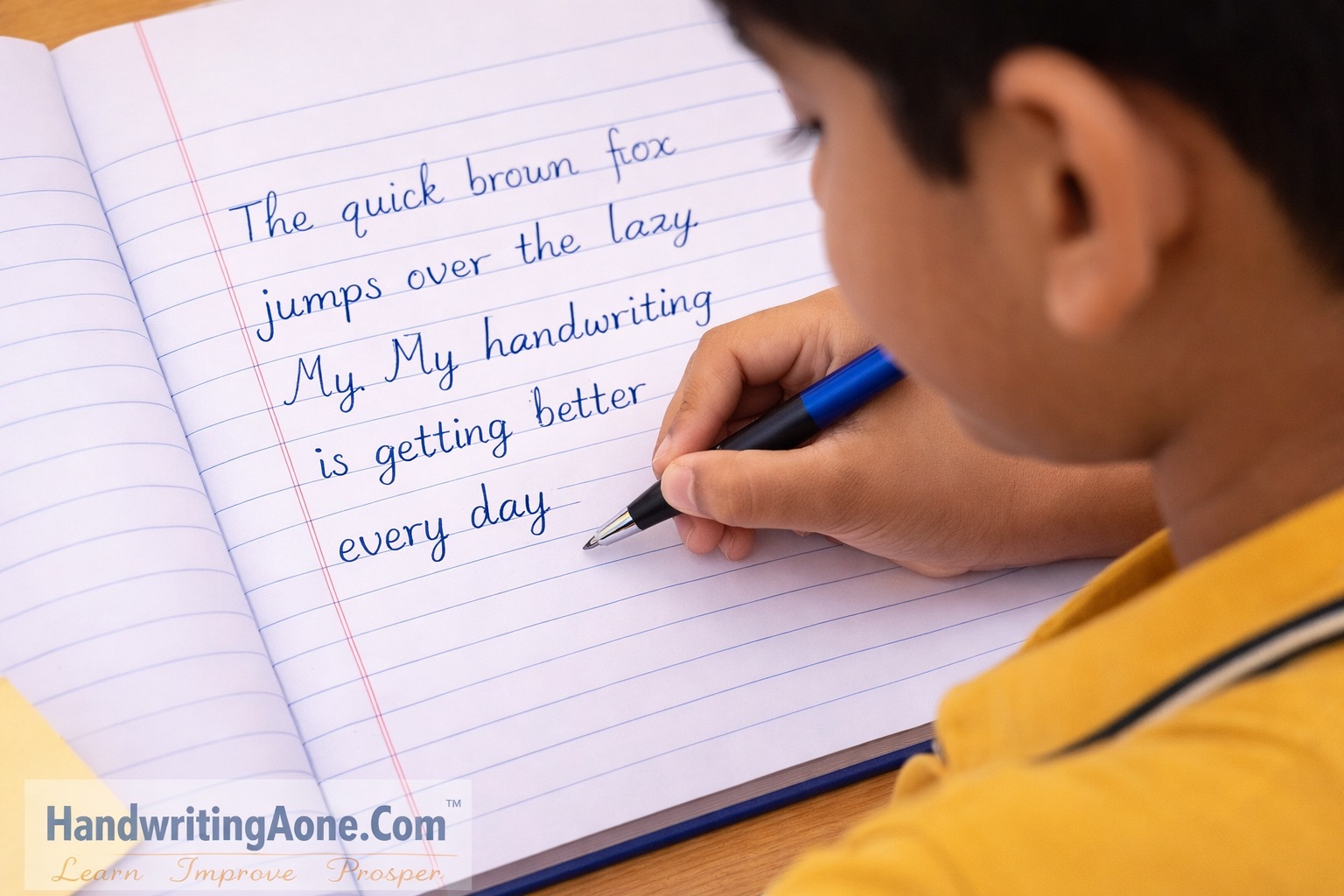
2. Poor Writing Speed and Stamina
 As a handwriting and academic skill expert, I often observe that students with:
-
Slow writing speed
-
Messy handwriting
-
Hand pain during writing
Avoid study sessions because writing feels exhausting.
Indian education systems require a lot of written work:
-
Homework
-
Class notes
-
Test papers
-
Long answers
If writing efficiency is weak, the child avoids studying altogether.
Parents searching:
-
Why my child avoids homework
-
Why my child cannot sit and study
May need to evaluate writing skills first.
3. Digital Distraction and Screen Addiction
 One of the most common modern problems is excessive screen exposure.
Children spend hours on:
-
Mobile games
-
Short videos
-
Social media
-
Online entertainment
These platforms provide instant stimulation.
Compared to this, textbooks feel slow and boring.
When attention span reduces, study sessions feel longer and harder.
Disinterest develops.
4. Fear of Failure
 Some children lose interest because they fear:
-
Scoring low marks
-
Being compared
-
Being scolded
-
Disappointing parents
Instead of trying harder, they withdraw.
Avoidance becomes a protective mechanism.
Parents may see laziness.
But often, it is hidden anxiety.
5. Lack of Clear Study Routine
 Children without structured study schedules tend to:
-
Procrastinate
-
Delay homework
-
Study irregularly
Without routine, the brain does not develop discipline.
Interest grows with consistency.
Random studying weakens engagement.
6. Constant Comparison and Pressure
 In many Indian households:
-
Marks are compared with relatives
-
Rank is discussed frequently
-
Mistakes are highlighted more than effort
Repeated comparison reduces motivation.
Children may think:
“No matter what I do, it’s not enough.”
Over time, interest fades.
7. Teenage Behavioural Changes
 In higher classes, parents often say:
“Earlier he was serious. Now he doesn’t listen.”
Adolescence brings:
-
Emotional fluctuations
-
Peer influence
-
Desire for independence
If communication becomes only about marks, resistance increases.
Disinterest sometimes reflects communication gaps.
8. Overloaded Academic Schedule
 Some students attend:
-
School
-
Tuition
-
Coaching classes
-
Extra classes
Without rest, mental fatigue builds up.
Burnout reduces curiosity and enthusiasm.
Interest cannot grow in exhaustion.
Is My Child Lazy?
 This is a common fear among parents.
From my 20 years of experience:
True laziness is rare.
More often, the issue is:
-
Academic inefficiency
-
Low confidence
-
Poor concentration
-
Writing discomfort
-
Emotional stress
Labeling the child as lazy worsens the problem.
Understanding the cause improves it.
 What Should Parents Do?

Parents searching:
-
How to motivate child to study
-
How to make child interested in studies
Need to focus on skill-building, not just motivation.
1. Improve Basic Academic Skills
If writing speed, handwriting clarity, or concentration is weak, improvement in these areas increases confidence.
Confidence builds interest.
2. Create a Fixed Study Routine
Short, consistent study slots work better than long forced hours.
Primary classes: 20–30 minutes
Higher classes: Gradually increase
Consistency builds discipline.
3. Reduce Screen Exposure
Controlled mobile usage improves attention span significantly.
4. Shift From Marks to Effort
Encourage effort and improvement instead of only results.
Positive reinforcement increases participation.
5. Identify Skill Gaps Early
If your child struggles with:
-
Writing speed
-
Presentation
-
Completing exam papers
-
Concentration
Addressing these mechanical gaps improves overall study interest.
When students feel capable, resistance reduces.
A Professional Observation After 20 Years
Students who regain:
-
Writing efficiency
-
Exam confidence
-
Structured study habits
-
Concentration ability
Show dramatic improvement in interest toward studies.
Interest does not appear magically.
It develops when learning becomes manageable.
Structured correction — especially in writing skills and concentration — often changes behaviour significantly.
Final Thought for Parents
If your child:
-
Avoids homework
-
Gets distracted easily
-
Says “I don’t like studying”
-
Seems uninterested in exams
Do not panic.
Most cases are reversible.
But ignoring the problem for years makes higher classes more stressful.
Early structured guidance builds long-term academic confidence.
Frequently Asked Questions (FAQs)
Q1. Why is my child not interested in studies?
Usually due to weak foundation, low confidence, distraction, or fear of failure.
Q2. How can I motivate my child to study?
Focus on improving skills and routine rather than only pressuring for marks.
Q3. Is it normal for teenagers to lose interest in studies?
Temporary decline is common, but persistent disinterest needs attention.
Q4. Does handwriting affect study interest?
Yes. Slow or tiring writing can make studying uncomfortable.
Q5. Should I scold my child for not studying?
Scolding may create short-term compliance but long-term resistance.
Q6. When should parents seek professional guidance?
If disinterest continues despite routine adjustments and supportive communication.
