
20 Years of Excellence |
★★★★★ 4.9 / 5.0 (300+) Google Ratings
| 10,000+ Students Trained
Fees |
FAQs |
Testimonials
📞 +91 89047 93133
✉ handwritingaone@gmail.com
Handwriting Classes for High School Students (8th & 9th Grade)
 High school begins to shape a student’s academic future. By the time students reach 8th and 9th grade, the academic environment becomes more demanding. Subjects become deeper, written answers become longer, and teachers expect greater clarity in presentation. These years are also the stage where students begin preparing mentally for board examinations.
During this period, writing becomes the primary medium through which knowledge is expressed and evaluated. Students may understand concepts well, but if they are unable to write clearly, quickly and consistently, their academic performance may not reflect their true potential.
Handwriting clarity, writing speed and structured answer presentation become increasingly important in high school.
Academic Demands Increase Significantly in High School
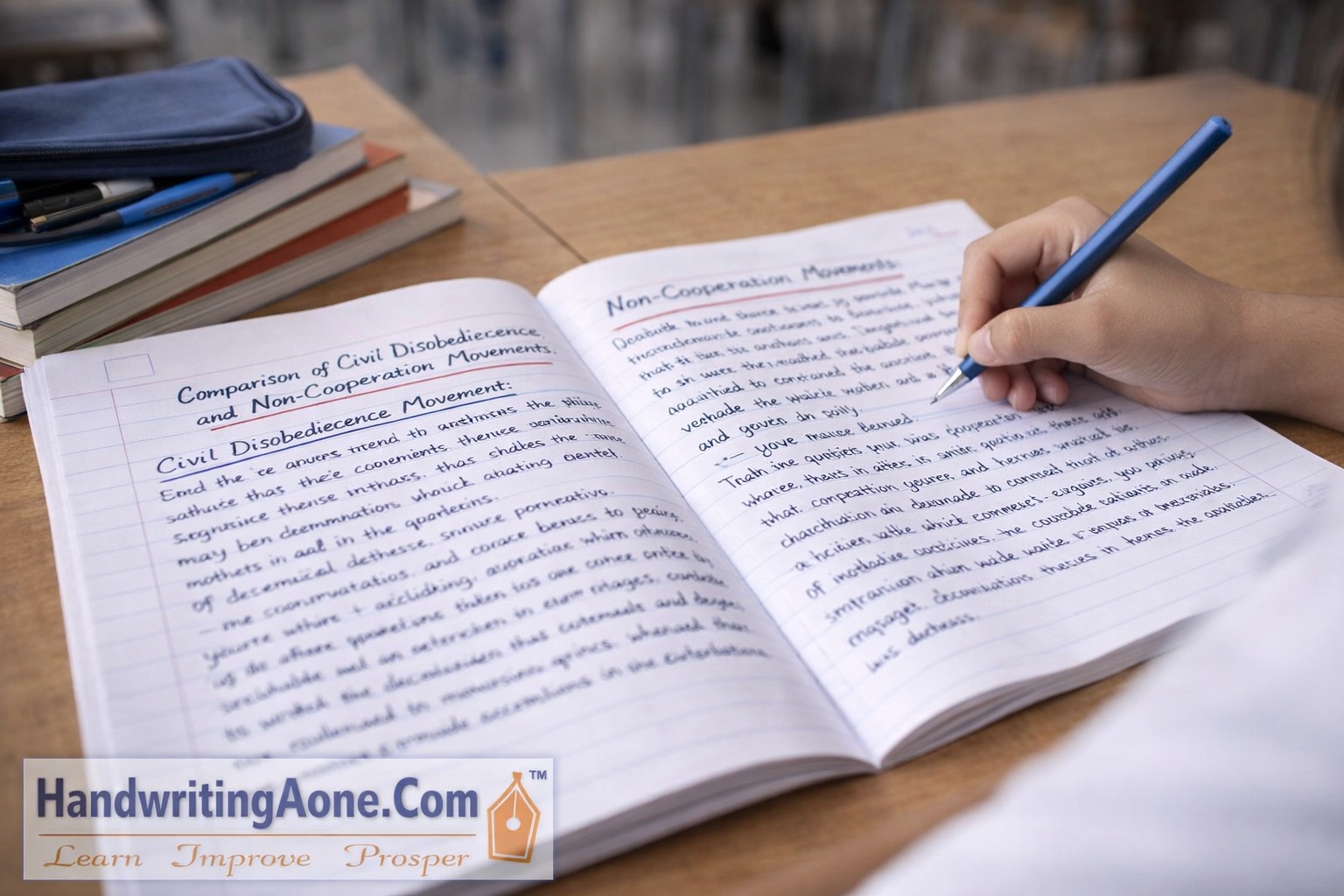 In 8th and 9th grade, students are expected to write detailed answers across multiple subjects. Science explanations, Social Studies answers, English comprehension responses and mathematical step-by-step solutions require both clarity and organization.
Examinations become longer and more structured. Students must maintain writing consistency for several pages within limited time. Teachers also begin paying greater attention to presentation, alignment and readability.
Students who struggle with slow writing or unclear handwriting often face difficulty completing answer papers comfortably. Even when they know the content well, the pressure of writing quickly while maintaining clarity can affect their performance.
Developing writing efficiency at this stage becomes essential before entering the board exam years.
Common Writing Challenges in 8th and 9th Grade Students
 Many high school students experience writing difficulties that gradually affect their academic confidence.
Some students write slowly and require more time to complete tests or homework. This leads to incomplete answers during examinations and reduced marks.
Others develop irregular handwriting patterns where letters vary in size, spacing becomes uneven, and alignment shifts across the page. As answer sheets become longer, handwriting often deteriorates toward the later pages.
Another common challenge is writing stamina. Students may begin writing neatly at the start of an exam but gradually lose consistency due to fatigue. Hand discomfort and reduced writing control affect the quality of the final answers.
These issues are often overlooked during earlier classes but become much more visible in high school, when writing volume increases significantly.
Why Handwriting and Presentation Matter in High School
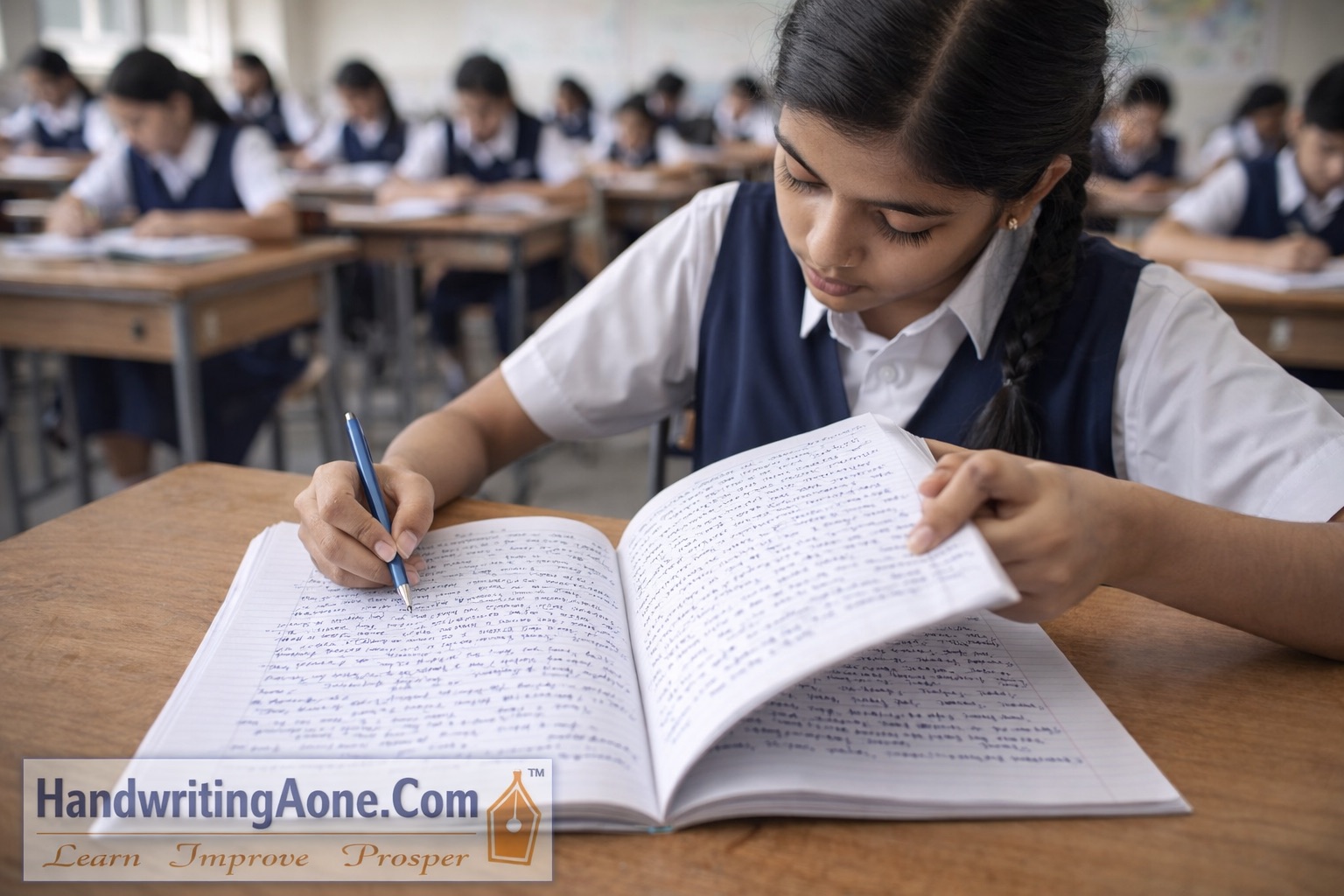 Teachers and examiners evaluate answer scripts based not only on correctness but also on readability and structure. A well-presented answer sheet reflects discipline and clarity of thought.
Neat handwriting allows examiners to read answers comfortably. Proper spacing and alignment create a visually organized answer script. Clear presentation helps highlight key points and improves the overall impression of the paper.
On the other hand, messy handwriting or rushed writing can make answers difficult to read. When examiners struggle to interpret writing, the evaluation process becomes less favourable.
For students preparing for important academic stages ahead, developing clear and confident writing habits becomes a valuable advantage.
Writing Speed and Exam Time Management
 Writing speed becomes increasingly important in high school examinations. Students must read questions carefully, think through answers and complete the entire paper within limited time.
When writing speed is too slow, students may rush the last sections of the paper or leave questions incomplete. This creates unnecessary loss of marks even when the student understands the subject well.
Training writing rhythm and speed helps students maintain steady progress throughout the examination. Controlled speed allows them to complete answer sheets calmly while maintaining neatness and clarity.
The Connection Between Writing, Focus and Confidence
 Writing is closely connected to mental focus. When writing becomes smooth and organized, students experience better concentration while studying and during examinations.
Clear writing patterns also strengthen memory recall. Students are able to structure answers logically and express their understanding more effectively.
As writing clarity and speed improve, students often develop greater confidence in academic situations. They approach exams with a stronger sense of control and preparedness.
High school is therefore the right stage to refine writing skills before the pressure of board exams begins.
Our Structured Approach for High School Students
 At HandwritingAone.com, we focus on improving handwriting and writing performance specifically for high school students. Our approach begins with a detailed analysis of the student’s writing patterns, including alignment, letter formation, spacing consistency and writing speed.
Based on this assessment, we guide students through structured handwriting stabilization exercises that improve clarity and uniformity. Controlled speed development techniques help increase writing pace while maintaining neat presentation.
We also focus on building writing stamina so students can maintain consistent handwriting throughout longer examinations. With regular practice and guidance, students gradually develop confident and efficient writing habits.
Our objective is to help students present their knowledge clearly and effectively during examinations.
Preparing for Board Exam Years
 The transition from 9th grade to 10th grade introduces one of the most important academic phases in a student’s life. Developing strong writing habits before entering board exam preparation gives students a valuable advantage.
Students who build handwriting clarity, writing speed and exam discipline during 8th and 9th grade are better prepared to handle the pressure of board examinations.
Early preparation helps reduce stress, improves time management and allows students to focus more on understanding concepts rather than struggling with writing difficulties.
👉 Learn full details about our English Cursive Handwriting Course on the main course page.
👉 Visit the English Print Handwriting Course page for complete syllabus and course structure.
Frequently Asked Questions – Handwriting Classes for 8th & 9th Grade Students
1. Why do high school students need handwriting improvement classes?
As academic demands increase in high school, students must write longer answers within limited time. Improving handwriting clarity and writing speed helps them present answers effectively and complete exams comfortably.
2. Can handwriting still improve in 8th or 9th grade?
Yes. Although writing habits are more established compared to younger students, structured correction methods can significantly improve clarity, spacing, alignment and speed. Many high school students show noticeable improvement with guided training.
3. Does handwriting affect marks in high school examinations?
Handwriting influences the readability and presentation of answers. Clear and organized writing allows examiners to evaluate answers easily, while messy or unclear handwriting may affect the overall impression of the answer script.
4. How does slow writing affect exam performance?
Students who write slowly may struggle to complete their answer papers within the allotted time. This can lead to rushed answers, incomplete responses or unnecessary stress during examinations.
5. How long does it take to improve handwriting and writing speed?
Improvement depends on the student’s existing writing habits and consistency of practice. With structured guidance, visible improvement can usually be observed within a few weeks.
6. My child’s handwriting becomes messy during long exams. Why does this happen?
This often occurs due to weak writing stamina. As the hand becomes tired, alignment and spacing begin to deteriorate. Training writing endurance helps maintain consistent handwriting throughout the exam.
7. Can handwriting training help students prepare for board exams?
Yes. Developing strong writing habits during 8th and 9th grade helps students manage the writing pressure of board examinations more effectively. It improves speed, clarity and answer presentation before the most important exam stage.
8. Will handwriting improvement increase academic confidence?
Yes. When students feel confident about their writing speed and presentation, they approach exams with less anxiety. Improved writing habits support better performance and stronger academic self-confidence.
_________________________________________________________________________
9) 💯 How long does it take to see improvement?
Most students see noticeable improvement within:
✅ 1 to 2 weeks (with practice)
Full improvement is achieved by completing 20 sessions.
Book your Free Handwriting Assessment Session Today.


