
20 Years of Excellence |
★★★★★ 4.9 / 5.0 (300+) Google Ratings
| 10,000+ Students Trained
Fees |
FAQs |
Testimonials
📞 +91 89047 93133
✉ handwritingaone@gmail.com

Why Teenage Students Don’t Listen to Parents & Teachers?

A 20-Year Expert Perspective for Indian Families
 For more than two decades, I have worked closely with students from primary school to higher secondary classes. One of the most common concerns parents bring to me — especially after Class 7 — is:
“Why doesn’t my teenage child listen to us?”
“Why are teenagers so rude to parents?”
“Why does my son ignore teachers?”
“Why has my child changed after entering higher classes?”
Let me say this clearly:
Teenagers are not becoming bad. They are becoming independent — without knowing how to handle it.
Understanding the root causes is the first step toward rebuilding communication and discipline.
Why Teenage Students Stop Listening
 Parents often search:
-
Why teenage students don’t listen to parents
-
Why teenagers argue with parents
-
Why teenagers ignore teachers
-
How to handle stubborn teenage child
-
Teenager not interested in studies
These are symptoms. The causes are deeper.
1.Psychological Need for Independence
 Between ages 12–17, a child’s brain undergoes major development.
Teenagers start:
-
Questioning authority
-
Forming personal opinions
-
Seeking identity
-
Comparing themselves with peers
When parents say:
“Do this because I said so.”
The teenage brain resists.
It is not always disrespect — it is a growing independence instinct.
2. Increased Academic Pressure in Higher Classes
 In Indian education systems, pressure rises sharply in:
-
Class 8
-
Class 9
-
Class 10 (Board year)
-
Class 11 & 12 (Career shaping years)
Teenagers feel:
-
Fear of failure
-
Comparison with classmates
-
Expectation overload
-
Future uncertainty
When overwhelmed, they often react by:
-
Shutting down
-
Avoiding discussions
-
Ignoring advice
-
Becoming argumentative
Parents interpret this as disobedience.
Often, it is stress.
3. Digital Distraction and Peer Influence
 One of the biggest modern factors is:
-
Mobile phone usage
-
Social media validation
-
Online gaming
-
Constant peer comparison
Teenagers are heavily influenced by friends and digital culture.
When parents advise discipline, teenagers compare:
“But others are allowed…”
Peer approval sometimes becomes stronger than parental guidance.
4. Communication Gap Between Generations
 Parents and teenagers think differently.
Parents focus on:
-
Security
-
Stability
-
Academic performance
-
Respect for authority
Teenagers focus on:
-
Freedom
-
Identity
-
Social belonging
-
Self-expression
When communication becomes only about marks and mistakes, emotional distance increases.
Repeated lectures reduce listening capacity.
5. Low Academic Confidence
 In my 20 years of experience, I have observed a strong link between:
-
Poor handwriting
-
Slow writing speed
-
Incomplete exam papers
-
Falling marks
And teenage frustration.
When students struggle academically but cannot explain why, they:
-
Avoid discussions
-
React defensively
-
Ignore teacher feedback
Sometimes “not listening” is a shield to hide insecurity.
Parents searching:
-
Teenager not interested in studies
-
Why my child scores less despite studying
May be dealing with confidence issues, not rebellion.
6. Emotional Hormonal Changes
Teenage years involve hormonal fluctuations that affect:
-
Mood stability
-
Impulse control
-
Emotional reactions
Small corrections may trigger strong responses.
What appears as overreaction is often emotional immaturity combined with biological change.
This phase requires guidance, not confrontation.
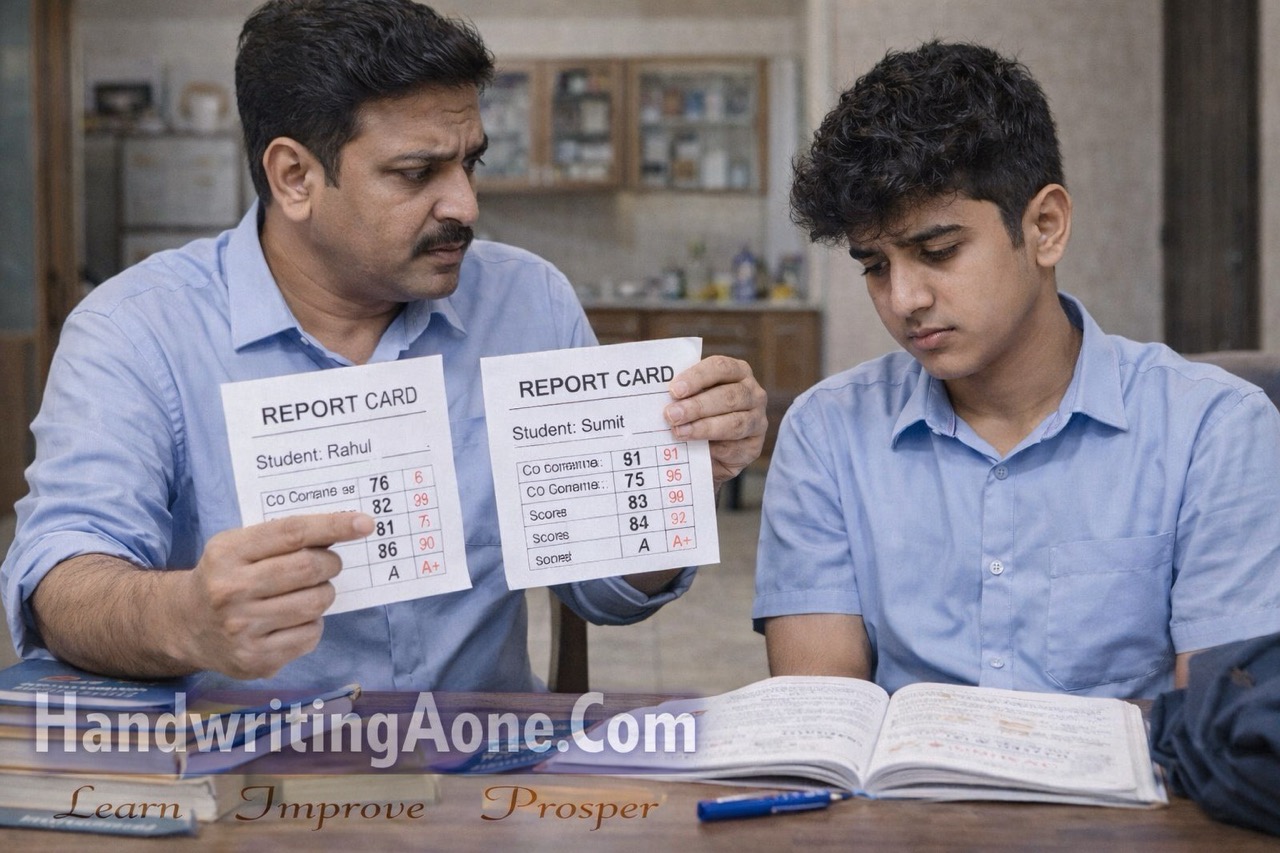
7. Excessive Scolding and Comparison
 Many Indian parents unintentionally:
-
Compare with cousins or neighbours
-
Mention rank repeatedly
-
Focus only on mistakes
-
Ignore small achievements
Over time, teenagers stop listening not because they don’t care — but because they feel unheard.
Repeated criticism reduces cooperation.
8. Lack of Structured Discipline
 Some families swing between:
-
Over-strict control
-
Complete freedom
Inconsistent rules create confusion.
Teenagers test boundaries to understand limits.
When limits are unclear, conflict increases.
Is It Normal for Teenagers Not to Listen?
 To some extent — yes.
Mild resistance, mood swings, and argument are normal developmental phases.
But warning signs include:
-
Complete withdrawal
-
Academic decline
-
Aggressive behaviour
-
Total disregard for responsibility
Early structured guidance prevents long-term behavioural gaps.
Why Forcing Rarely Works
 Parents often try:
-
Increasing tuition
-
Removing privileges suddenly
-
Strict punishments
-
Emotional blackmail
These may produce temporary compliance but long-term resentment.
Teenagers respond better to:
-
Respectful dialogue
-
Clear structure
-
Logical consequences
-
Gradual discipline building
Authority must shift from fear-based to respect-based.
A Professional Observation After 20 Years
 From working with thousands of Indian students:
-
Teenagers who feel understood cooperate better.
-
Teenagers struggling academically resist more.
-
Structured skill improvement increases listening behaviour.
When students regain confidence in:
-
Writing speed
-
Presentation
-
Academic performance
Their attitude improves significantly.
Often behavioural resistance reduces once academic inefficiency is corrected.
Final Thought for Parents
 If your teenage child:
-
Talks back
-
Ignores advice
-
Avoids studies
-
Seems distracted constantly
Do not label them as “spoilt.”
Ask:
-
Are they overwhelmed?
-
Are they insecure?
-
Are they overstimulated digitally?
-
Are they lacking structured discipline?
Teenage years are transitional.
With proper guidance and calm leadership, this phase can be stabilised.
Ignoring behavioural signs or reacting aggressively often deepens the gap.
Early structured intervention — academic and behavioural — creates lasting improvement.
Frequently Asked Questions (FAQs)
Q1. Why do teenagers not listen to parents?
Due to independence development, peer influence, academic pressure, and emotional changes.
Q2. Why do teenage students argue with teachers?
Often due to stress, insecurity, or desire for autonomy.
Q3. Is it normal for teenagers to be stubborn?
Mild stubbornness is normal. Persistent disrespect requires guidance.
Q4. How to handle a teenage child who ignores studies?
Identify root causes — academic difficulty, distraction, or emotional stress — instead of only punishing.
Q5. Does academic struggle affect teenage behaviour?
Yes. Low confidence often leads to resistance and withdrawal.
Q6. When should parents seek professional guidance?
If communication breakdown continues and academic decline becomes visible.


