Why Do Students Lose Marks Because of Handwriting?
A Handwriting Expert Explains What Most Indian Parents Don’t Realise
 For more than 20 years, I have worked closely with school students across India — from primary classes to board exam aspirants. One concern I repeatedly hear from parents is:
“My child knows the answers, but still loses marks. Is handwriting the reason?”
Parents frequently search online:
-
Do students lose marks for bad handwriting?
-
Does handwriting affect exam marks?
-
Why did my child lose marks despite writing correct answers?
-
Does neat handwriting give more marks?
-
Can messy handwriting reduce board exam marks?
Let me clarify something honestly:
Yes — handwriting can and does affect marks in Indian exams.
Not officially in every case. But practically? Very often.
This article explains why.
Does Handwriting Really Affect Exam Marks?
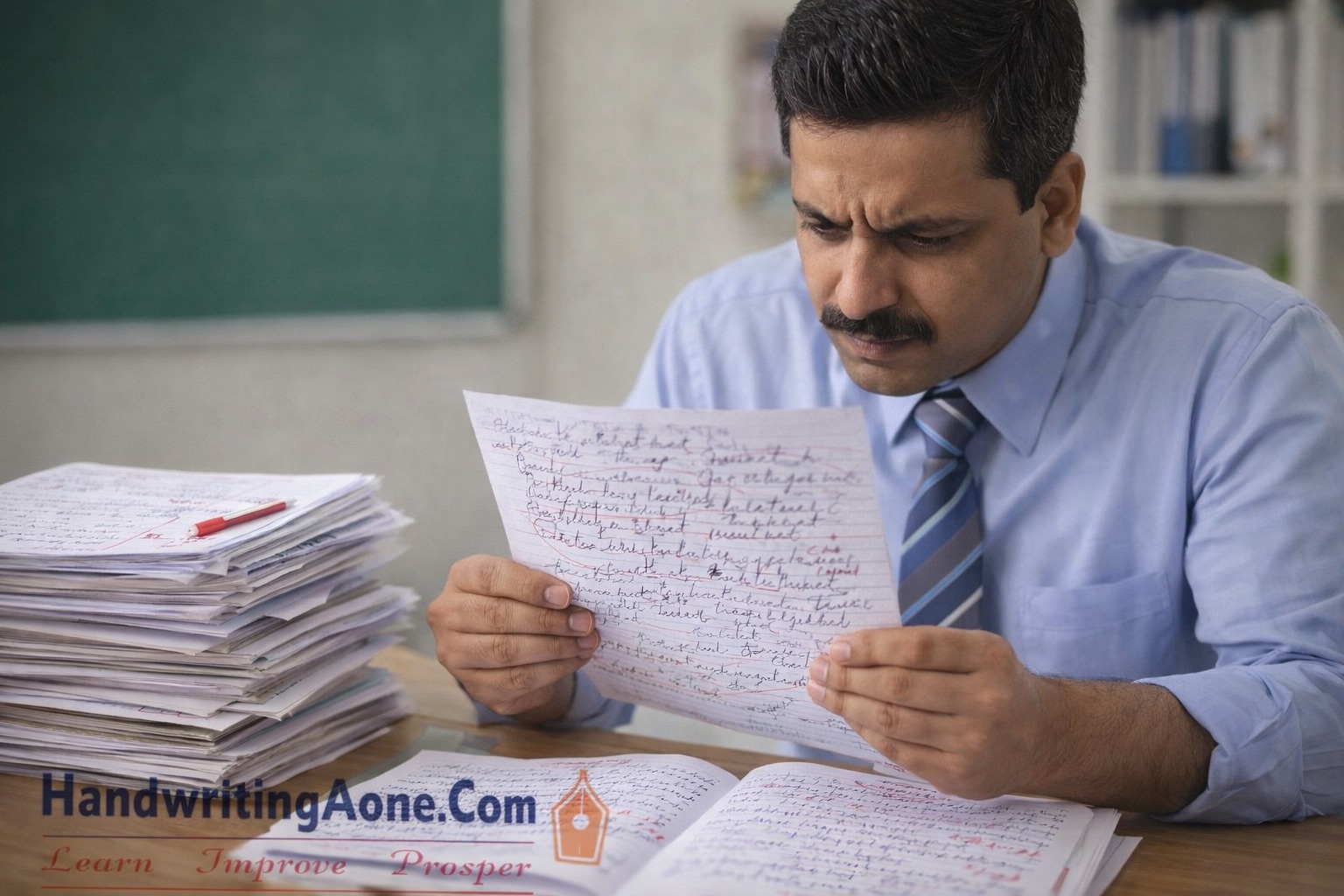 In theory, examiners evaluate answers based on content.
In reality, presentation influences perception.
When a teacher checks 40–60 answer sheets in a day, clarity becomes extremely important. If handwriting is:
-
Hard to read
-
Overwritten repeatedly
-
Poorly spaced
-
Extremely small or very large
It increases correction effort. And when correction effort increases, marks often reduce — even subconsciously.
1. Examiner Cannot Read the Answer Properly
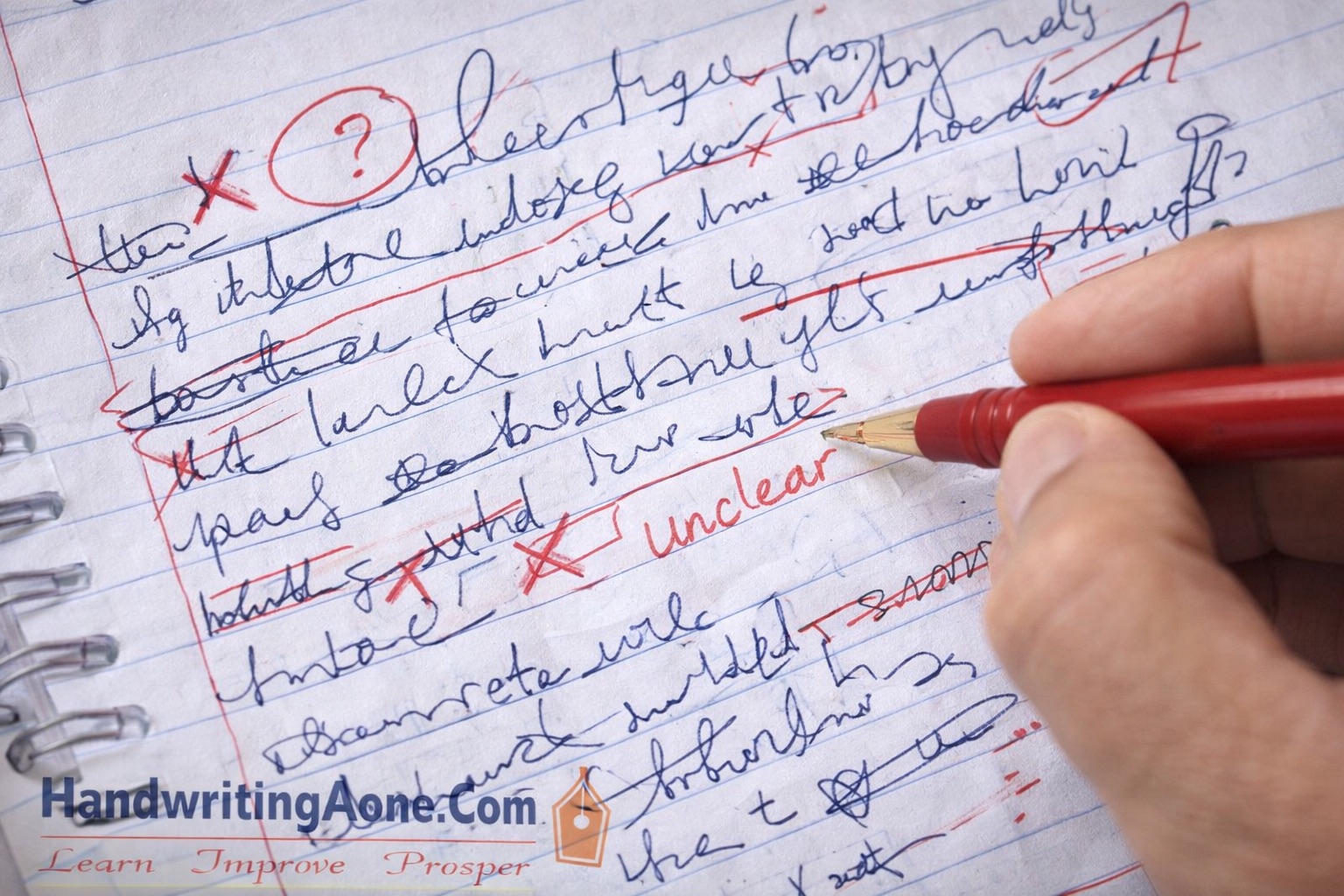
 This is the biggest reason students lose marks due to handwriting.
What Parents Notice:
-
“Teacher said writing is not clear.”
-
“Answer is correct but got fewer marks.”
What Actually Happens:
If an examiner struggles to read words clearly, they may:
-
Skip unclear lines
-
Misinterpret words
-
Award partial marks
Examiners are not going to decode unclear writing like a puzzle.
If a word is not readable, it cannot be awarded marks.
2. Poor Presentation Reduces Overall Impression
 Parents often search:
-
Does neat handwriting give more marks?
-
Does presentation matter in exams?
The answer is yes.
When a paper looks:
-
Clean
-
Well-spaced
-
Properly aligned
-
Organized with margins
It creates a positive first impression.
On the other hand, messy scripts with overwriting and no structure create a negative impression before the answer is even read fully.
Presentation affects subjective papers like:
-
English
-
Social Science
-
History
-
Biology
-
Theory papers in higher classes
In Indian academic systems, presentation still matters.
3. Overwriting and Cutting Create Confusion
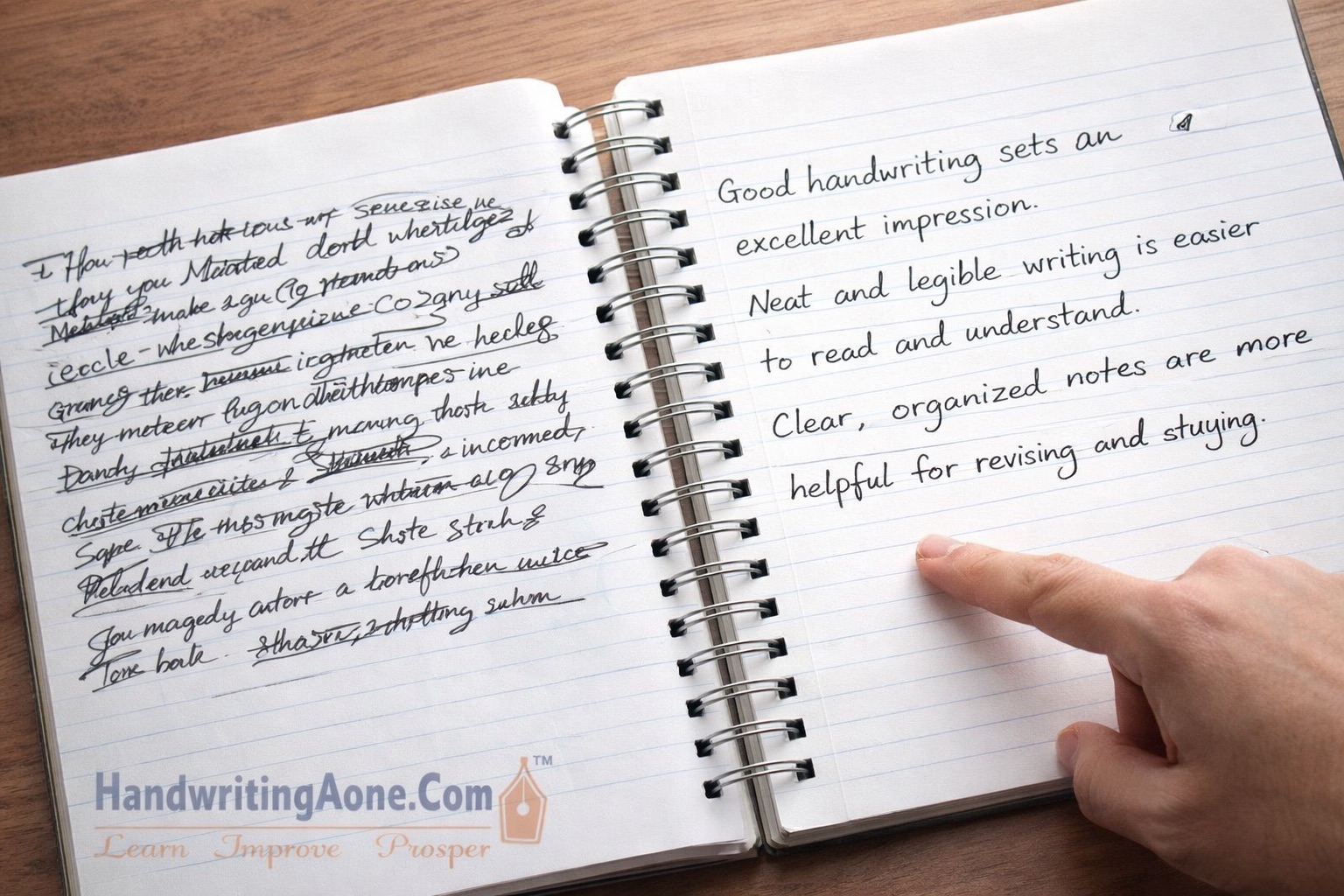 Many students:
-
Write fast and overwrite letters
-
Scratch words repeatedly
-
Cut sentences midway
-
Use arrows and messy corrections
This makes the answer look unstructured.
Examiners prefer clarity.
If the presentation is confusing, the student may lose marks even when the concept is correct.
4. Writing Too Slow Leads to Incomplete Papers
 Another serious problem parents search about:
“My child could not finish the paper on time.”
Poor handwriting often connects with slow writing speed.
When a student:
-
Forms letters inefficiently
-
Thinks about stroke direction
-
Lacks writing stamina
They waste valuable exam time.
Incomplete answers automatically mean lost marks — even if knowledge is strong.
5. Inconsistent Letter Size and Spacing
 Common issues seen in notebooks:
-
Some letters too big, some too small
-
Words cramped together
-
No margins
-
Lines not straight
This affects readability.
In longer answers, inconsistent writing becomes tiring for the examiner.
Tiring scripts rarely receive generous marking.
6. Examiner Fatigue Is Real
 This is something parents rarely consider.
Teachers checking hundreds of papers experience mental fatigue.
When they see:
-
Clear handwriting
-
Proper paragraphing
-
Underlined keywords
-
Structured answers
It becomes easier to award marks confidently.
But if handwriting is messy, the examiner must slow down — and this reduces marking positivity.
Handwriting does not just communicate answers. It communicates discipline and clarity.
7. Low Confidence Reflects in Writing
 Many students with poor handwriting:
-
Rush through answers
-
Avoid writing detailed explanations
-
Write shorter answers than required
Why?
Because they are uncomfortable with writing.
This indirectly reduces marks.
Poor handwriting often creates academic hesitation.
Why Parents Realise This Too Late
 In my experience working with Indian students:
-
Handwriting issues begin in Class 1 or 2
-
Serious impact is seen by Class 6 or 7
-
Panic begins before board exams
By then, habits are deeply formed.
Parents say:
“We thought it will improve automatically.”
Unfortunately, handwriting does not improve automatically without structured correction.
Why Random Practice Does Not Solve It
 Many parents try:
-
Extra copying practice
-
Writing one page daily
-
Downloaded worksheets
But if the core issues are:
-
Incorrect grip
-
Wrong stroke formation
-
Poor spacing awareness
-
Lack of speed balance
Then repetition only strengthens mistakes.
Handwriting improvement requires correction, not just practice.
A Professional Perspective After 20 Years
 From my two decades of experience:
-
Most children who lose marks due to handwriting are academically capable.
-
The problem is mechanical, not intellectual.
-
Early correction prevents long-term academic impact.
Handwriting affects:
-
Presentation marks
-
Writing speed
-
Examiner comfort
-
Student confidence
It may not officially reduce marks in every case — but practically, it influences outcomes.
Especially in Indian board and school systems where subjective answers dominate.
Final Thought for Concerned Parents
 If your child:
-
Knows answers but scores less
-
Writes slowly in exams
-
Gets comments like “Improve handwriting”
-
Avoids written subjects
Do not ignore it.
Handwriting is a trainable skill. But the longer it is left uncorrected, the harder the correction becomes.
Structured evaluation and systematic retraining make a measurable difference — especially before crucial academic years.
Frequently Asked Questions (FAQs)
Q1. Do students really lose marks for bad handwriting?
Yes, especially in subjective papers. If answers are unclear, marks may be reduced.
Q2. Does neat handwriting give more marks?
Neat handwriting improves presentation and readability, which positively influences marking.
Q3. Can messy handwriting affect board exam marks?
In board exams, clarity is essential. Unreadable answers cannot be awarded full marks.
Q4. My child knows answers but still scores less. Why?
Presentation, incomplete answers, or unclear writing may be affecting marks.
Q5. Can handwriting improve after Class 8?
Yes, but retraining is required. Early correction is easier.
Q6. How do I know if handwriting is affecting marks?
If teachers repeatedly comment on presentation or clarity, it is a strong indicator.
