Why Is My Child’s Handwriting So Bad?
A Handwriting Expert Explains the Real Reasons Indian Parents Overlook
 For over 20 years, I have worked with school-going children across India — from Class 1 beginners to Class 10 board exam students. And one question remains constant:
“Sir, why is my child’s handwriting so bad?”
Parents search online for:
-
Why is my child’s handwriting messy?
-
How to improve bad handwriting in kids?
-
My child writes very slow in exams – what to do?
-
Why does my child hate writing?
-
How to make handwriting neat and clean?
Before jumping into quick fixes, let’s understand something important:
Bad handwriting is rarely laziness. It is usually a hidden skill gap.
 The Real Reasons Behind Poor Handwriting

Most parents see the symptom — messy writing.
But they miss the root causes.
Let’s look deeper.
1. Weak Pencil Control & Improper Grip
 One of the most common reasons for poor handwriting in Indian students is incorrect pencil grip.
What Parents Notice:
-
Very dark pressing or very light writing
-
Hand pain after 10–15 minutes
-
Shaky letters
-
Child avoiding written homework
What Is Actually Happening:
The child lacks fine motor control and stability.
Without proper finger positioning, letters can never look clean — no matter how much practice is done.
Most children are never corrected properly in early classes. The wrong grip becomes a habit.
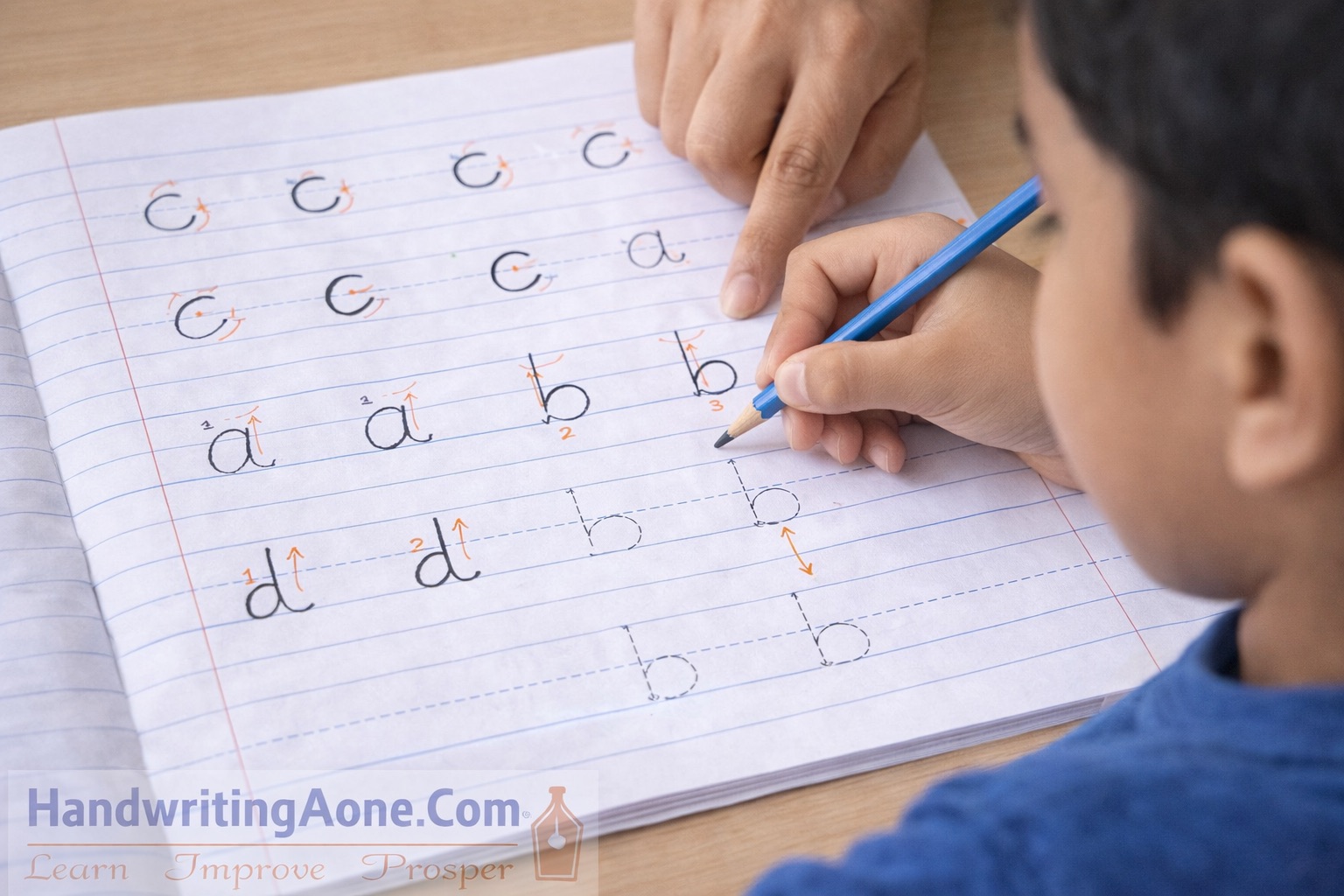
2. Incorrect Letter Formation Since Early Classes
 This is one of the biggest hidden problems.
Common Signs:
-
Letters not sitting on the line
-
b and d confusion
-
Capital and small letters mixed
-
Inconsistent size
If stroke direction is learned incorrectly in Class 1 or 2, the habit continues till Class 8 or beyond.
Parents often say:
“He has been writing like this for years.”
Exactly. Because no one corrected the foundation.
3. Poor Spacing and Page Presentation
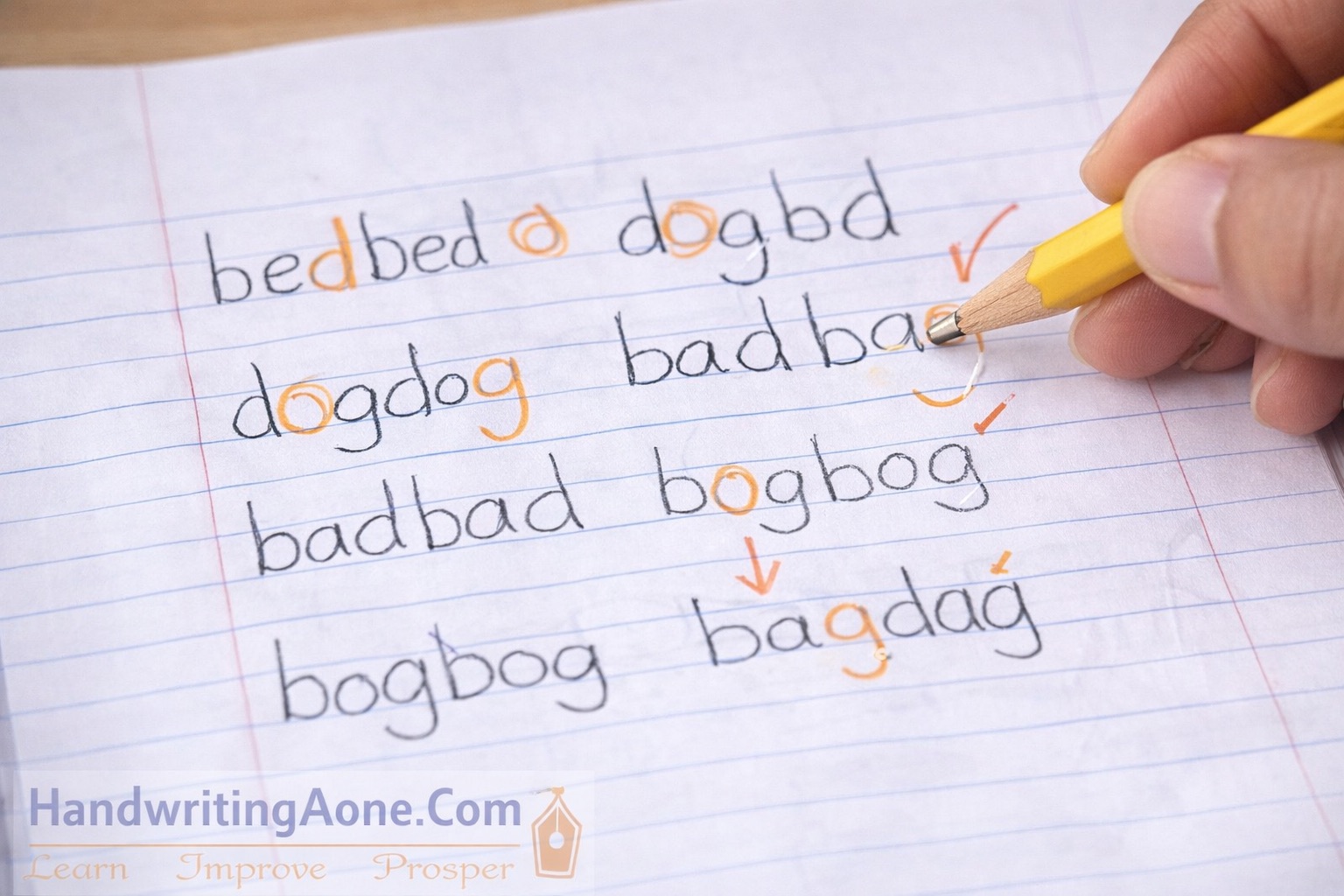 Many children:
-
Join words together
-
Leave random gaps
-
Ignore margins
-
Write in a zig-zag alignment
This makes handwriting look immature and crowded.
In subjective exams, presentation matters.
Teachers unconsciously award better marks to clearer scripts.
Poor spacing is not carelessness — it is lack of structured training.
4. Writing Too Slow in Exams
 Parents frequently complain:
“My child cannot complete the paper on time.”
Slow writing usually happens due to:
-
Overthinking letter shapes
-
Weak motor coordination
-
Lack of writing stamina
-
No speed training
When the foundation is weak, speed suffers.
Children then panic in exams — which worsens handwriting further.
5. Writing Too Fast and Extremely Messy
 On the opposite side, some children:
-
Rush through work
-
Write unreadable letters
-
Ignore neatness completely
This often develops when:
-
Teachers focus only on syllabus completion
-
Parents emphasize finishing homework quickly
-
No one monitors writing quality
Speed without structure creates permanent messy habits.
Low Concentration & Screen Distraction
 Today’s children spend significant time on:
-
Mobile phones
-
Tablets
-
Fast visual content
This reduces:
-
Writing patience
-
Hand stamina
-
Focus duration
Handwriting requires calm, controlled movement.
Screen habits encourage speed and distraction.
The result? Reduced writing endurance.
7. Lack of Early Supervision
 Many parents assume:
“School will automatically improve handwriting.”
In reality, most schools focus on syllabus, not stroke correction.
By Class 4 or 5:
-
Writing style becomes fixed
-
Mistakes become habits
-
Correction becomes harder
The earlier the intervention, the easier the improvement.
Why Online Tips Often Don’t Work
 Parents often try:
-
Downloaded worksheets
-
Random YouTube videos
-
Extra copywriting practice
-
Scolding for neatness
But here is the uncomfortable truth:
Practice without correction reinforces mistakes.
If the grip is wrong, more writing worsens the grip habit.
If stroke direction is wrong, repetition strengthens the error.
If spacing is incorrect, copying paragraphs daily will not fix alignment.
This is why many parents say:
“We tried everything. Nothing changed.”
Because handwriting is not just practice.
It is supervised correction + structured retraining.
When Should Parents Be Concerned?
 You should pay serious attention if:
-
Handwriting is unreadable after Class 3
-
Child avoids writing tasks
-
Writing speed is very slow
-
Letters remain inconsistent after years
-
Teacher repeatedly complains
Poor handwriting does not just affect marks.
It affects confidence.
Many children start believing:
“I am weak in studies.”
When in reality, the problem is mechanical — not intellectual.
A Professional Perspective After 20 Years
 In most cases I have handled across Indian schools:
-
The child is intelligent.
-
The problem is foundational.
-
The correction requires method.
Handwriting improvement is a retraining process, not a motivational speech.
It involves:
-
Stroke correction
-
Grip monitoring
-
Spacing discipline
-
Speed balancing
-
Writing stamina building
This level of supervision is difficult to manage casually at home.
Final Thought for Parents
 If your child’s handwriting worries you, remember:
-
It is not laziness.
-
It is not lack of intelligence.
-
It is not permanent.
But ignoring it for years makes correction harder.
Neat handwriting still plays a significant role in Indian academic systems — especially in descriptive exams and board classes.
Early structured guidance makes the biggest difference.
If you feel your child needs systematic improvement rather than random practice, seeking expert evaluation can save years of frustration.
Frequently Asked Questions (FAQs)
Q1. Why is my child’s handwriting messy even after daily practice?
Because practice without structured correction strengthens existing mistakes.
Q2. Is poor handwriting a sign of low intelligence?
Absolutely not. Most children with messy handwriting are academically capable.
Q3. Can handwriting improve after Class 6 or 7?
Yes, but it requires retraining. Early correction is easier.
Q4. Why does my child write very slowly?
Usually due to weak motor control or lack of speed training.
Q5. Should I be worried if teachers complain about handwriting?
Yes. Repeated complaints indicate a foundation issue that needs correction.
English Print Handwriting Course Cursive Handwriting Course
